
2026-08-31 · James Anderson
How Local Soil Conditions Affect Water Damage Recovery
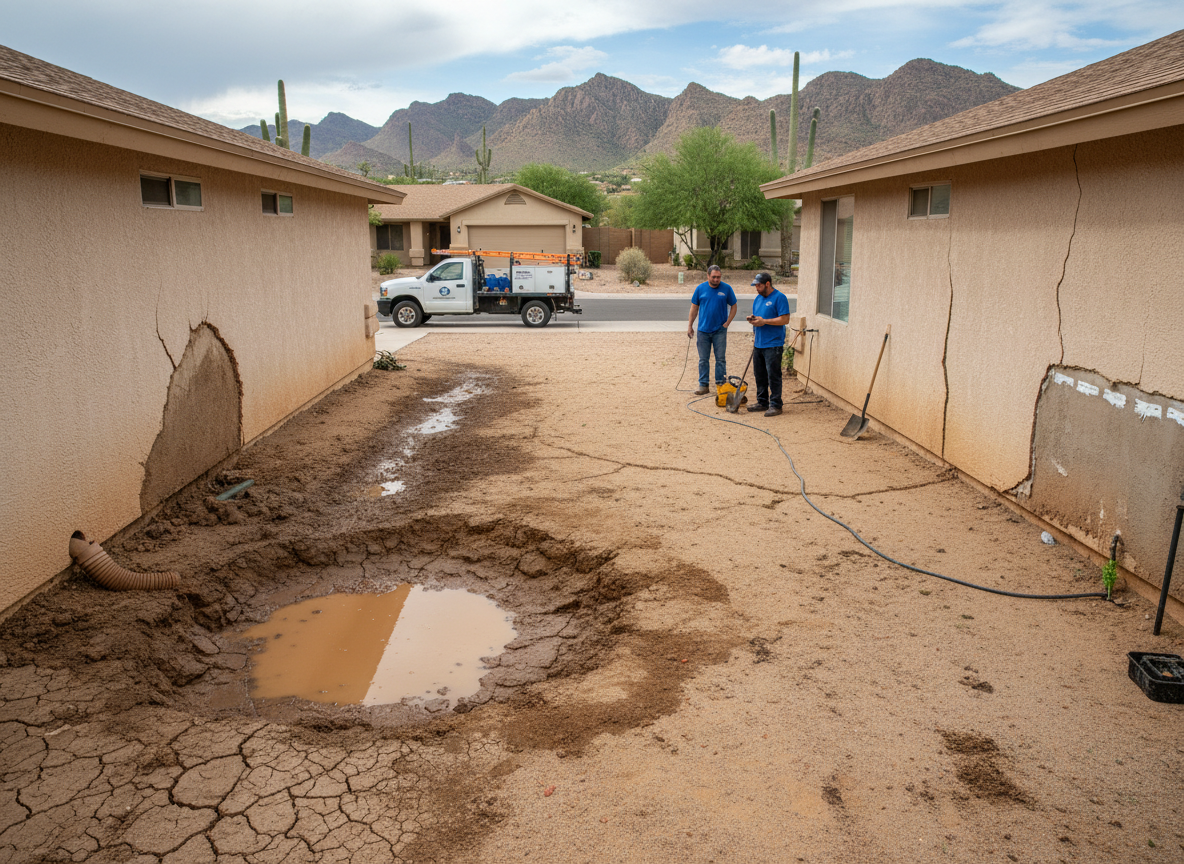
Fountain Hills soil, mostly sandy with pockets of caliche and some clay lenses across Downtown Fountain Hills and Fountain Hills Heights, slows initial water absorption yet traps moisture against slabs once saturation occurs, extending full recovery by days compared with faster-draining soils farther west in Scottsdale.
Soil Composition Around Fountain Hills
Maricopa County desert soils here formed from weathered granite and volcanic ash, creating a mix that drains quickly on the surface during the mild winter rains but holds water in deeper caliche layers common beneath many 1980s and 1990s homes near Fountain Park. These layers act like a barrier, forcing water to travel laterally toward foundations rather than straight down. Crews working after monsoon events therefore spend extra time mapping moisture migration paths that do not appear in wetter climates. The same soil profile appears in nearby Mesa but shows more clay content there, changing drying strategies when crews cross county lines.
Moisture Movement and Extraction Challenges
Sandy topsoil lets surface water vanish fast in the 100-plus degree heat, yet the underlying caliche slows vertical drainage, so water pools against stem walls in Fountain Hills Heights properties. This pattern requires targeted Water Extraction & Removal that focuses on perimeter trenches rather than simple floor-level pumps. Without addressing the lateral flow, residual moisture reappears days later inside wall cavities. Local operators track these patterns by probing soil moisture at 18-inch and 36-inch depths around the structure before starting equipment placement.
Impact on Structural Drying Timelines
Once water reaches the slab, caliche restricts airflow beneath the concrete, lengthening the time needed for Structural Drying & Dehumidification by several days. Technicians place more drying mats and often run negative-pressure systems longer because the soil itself releases stored humidity back into the structure overnight. Homes built on the slight slopes near the Fountain Hills Fountain experience faster surface runoff but still face the same sub-slab moisture trap. Monitoring daily moisture readings at multiple depths prevents premature equipment removal that leads to hidden mold later.
Foundation and Slab Considerations
Many properties in Fountain Hills Ranch and North Heights sit on expansive pockets that swell slightly after rare heavy rains, creating micro-cracks that let water travel farther under the slab. This movement explains why slab-leak signs often appear first in these neighborhoods. Reading the full article on Signs Of Slab Leaks Common In Fountain Hills Properties helps homeowners recognize early indicators before a small leak becomes widespread damage. Recovery crews adjust by isolating zones rather than treating entire floors uniformly.
Practical Recovery Steps for Local Conditions
Begin with a thorough soil-probe survey around the foundation perimeter, then stage extraction equipment to follow the lateral moisture path created by caliche. Follow extraction with extended dehumidification cycles that account for nightly humidity rebound from the soil. Schedule follow-up visits 48 hours after equipment removal to verify no moisture has returned from the subgrade. These steps, performed by teams familiar with Maricopa County desert soils, reduce repeat visits and protect the home from secondary issues common in the hot climate.