
2026-08-31 · James Anderson
Checking For Hidden Moisture After Fountain Hills Monsoons
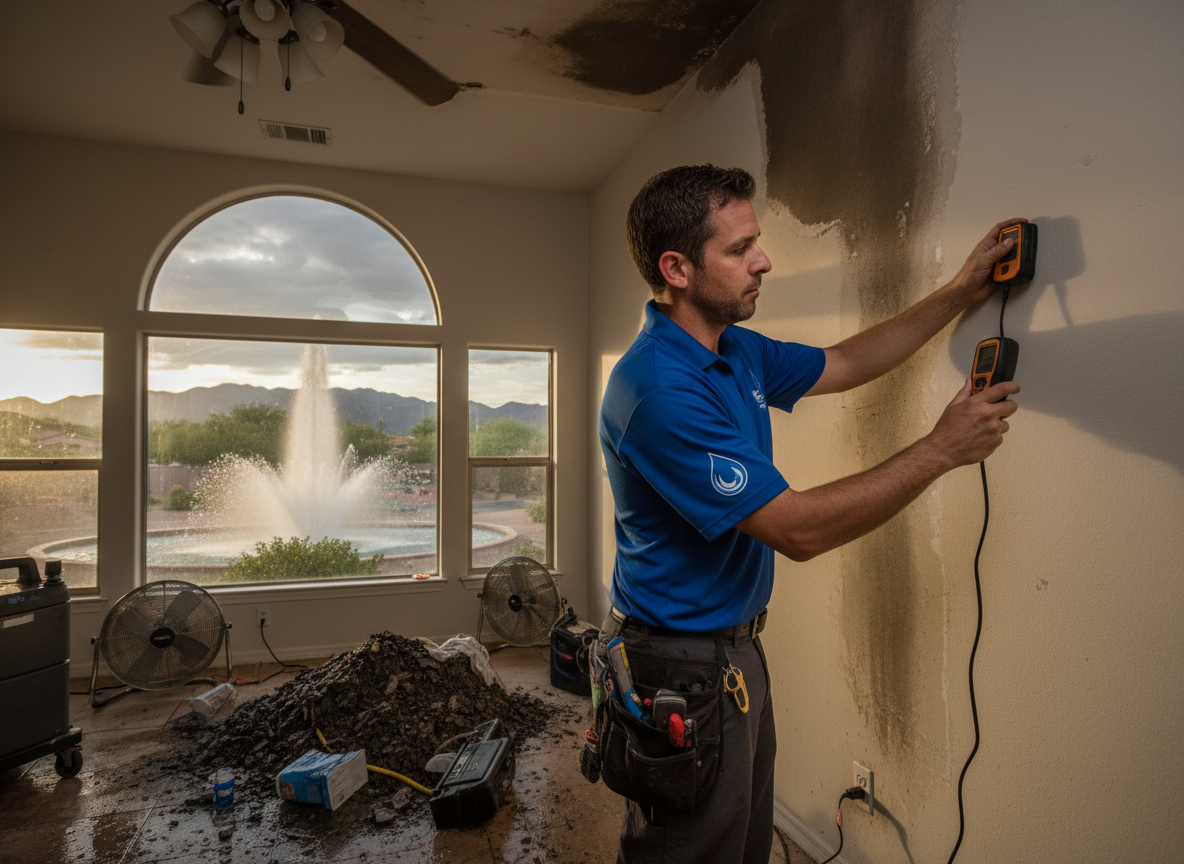
After Fountain Hills monsoons, hidden moisture typically remains detectable in wall cavities and slab edges for 10–21 days without targeted drying. Homes in Downtown Fountain Hills and Fountain Hills Heights often trap water behind stucco or in crawl spaces because the hot desert climate drives fast surface drying while deeper layers stay wet. Monsoon downpours hit Maricopa County hard in July and August, sending runoff toward lower lots near Fountain Park and the Fountain Hills Fountain. Older single-story ranch homes common here have slab-on-grade foundations that absorb water at the perimeter during these storms. Checking only visible floors or ceilings misses the real problem areas that later cause musty odors or warped baseboards.
Inspecting Wall Cavities After Heavy Rains
Maricopa County monsoon rains often push water upward into stucco-clad walls on properties built in the 1980s and 1990s around Fountain Hills Heights. Use a moisture meter on interior drywall at least 12 inches above the floor in every room that shares an exterior wall. Pay special attention to corners near downspouts and any area within 6 feet of the foundation. If readings exceed 15 percent moisture content, remove baseboards to expose the bottom plate for further testing. Desert heat can mask the issue by drying the outer surface within 48 hours, yet insulation behind remains saturated. This pattern repeats in many Fountain Hills Ranch and Crestview homes where stucco meets concrete block. Document readings on multiple days to confirm whether levels are dropping naturally or require professional intervention.
Checking Slabs and Underfloor Areas
Concrete slabs in Fountain Hills properties absorb monsoon water at the edges and hold it for weeks because local soil retains moisture longer than the surrounding desert suggests. Walk the perimeter inside the home and note any cool spots on the floor that feel damp to the touch after the air has dried. Lift carpet edges or remove vent covers in bathrooms and laundry rooms to inspect the subfloor. Signs Of Slab Leaks Common In Fountain Hills Properties explains how shifting desert soil after heavy rain can crack slabs and allow water to migrate inward. In homes near Fountain Park, grading often directs runoff toward the garage slab, creating hidden pockets under tile. Measure relative humidity under the floor with a probe if possible; sustained levels above 60 percent indicate trapped moisture that standard fans will not reach.
Evaluating Attics and Roof Deck Moisture
Monsoon winds drive rain under tile roofs common throughout Fountain Hills, leaving moisture in roof decks and insulation above living spaces. Enter the attic during daylight and look for dark streaks on rafters or compressed insulation that feels heavier than surrounding areas. Check near skylights and plumbing vents first, as these are frequent entry points during July storms. How Local Soil Conditions Affect Water Damage Recovery notes that clay pockets in Maricopa County soil can keep roof runoff ponding longer, increasing the chance of deck saturation. Use an infrared camera if available to spot temperature differences that signal hidden dampness. Homes in North Heights and Shadow Canyon often have vaulted ceilings where moisture travels along the slope before collecting in corners.
When to Bring in Structural Drying Equipment
If moisture readings remain elevated after seven days of natural ventilation, Structural Drying & Dehumidification becomes necessary to prevent secondary damage. Place commercial dehumidifiers in affected rooms and monitor daily until wall and slab readings fall below 12 percent. In Fountain Hills homes built on sloped lots near Eagle Mountain, water can travel under the slab from higher ground, requiring extraction from multiple access points. Emergency Water Damage Restoration teams familiar with local construction know to pull baseboards and drill small weep holes in drywall rather than relying on surface drying alone. Continue checking for two weeks after equipment is removed, especially during the mild winter months when evaporation slows.