
2026-08-31 · James Anderson
Drying Out Water Damaged Drywall After Desert Storms
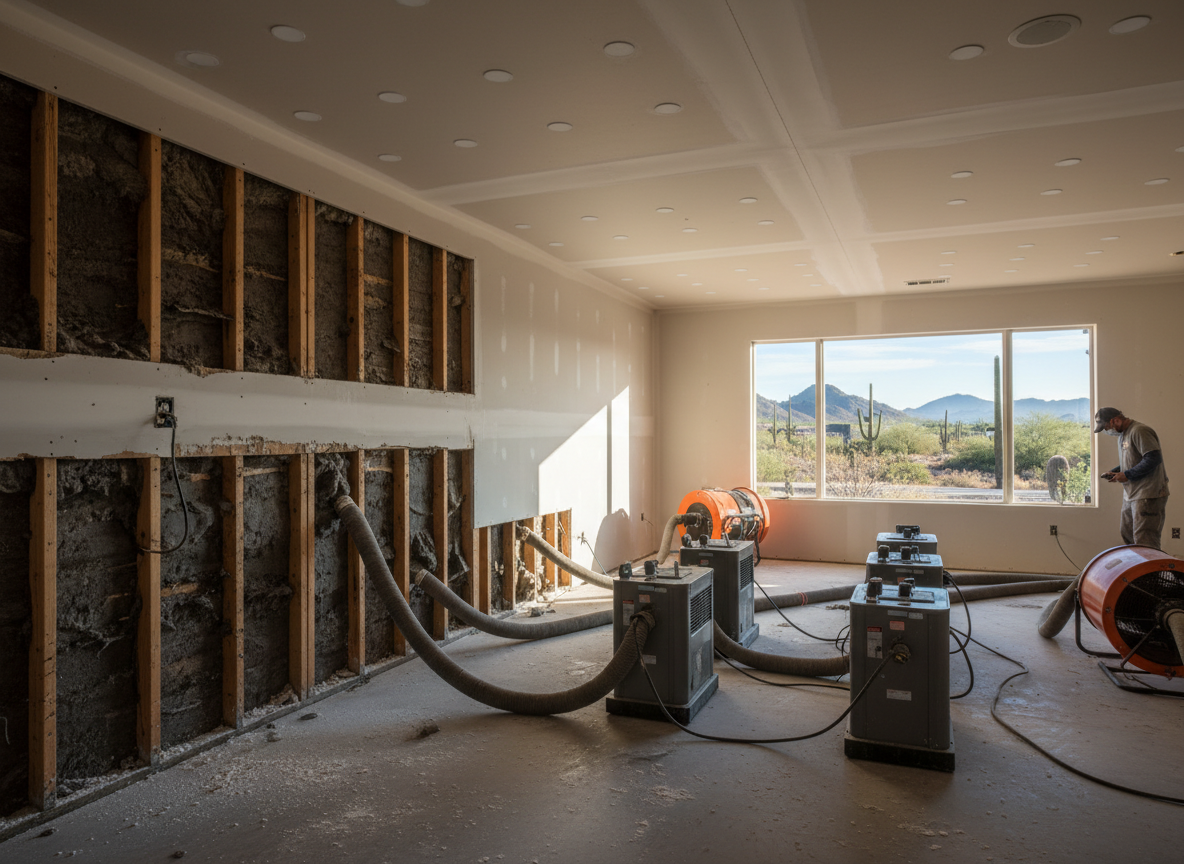
In Fountain Hills homes, water damaged drywall from desert storms can be dried out in 4–7 days when structural drying and dehumidification begins within 24 hours and targets moisture readings below 15 percent. Hot desert air helps surface drying but leaves trapped moisture in gypsum cores, especially in single-story ranch homes common in Downtown Fountain Hills and Fountain Hills Heights. Maricopa County flash flooding from monsoon events pushes water up baseboards and into wall cavities faster than residents expect.
How Desert Storms Affect Drywall in Fountain Hills
Monsoon rains hit Fountain Hills hard because the terrain funnels runoff toward lower lots near Fountain Park and the Fountain Hills Fountain. Homes built before 1995 often have 1/2-inch drywall without moisture-resistant backing, so water wicks upward 12–18 inches above the floor. The region’s mild winters do not freeze pipes, yet sudden downpours still overwhelm stucco exteriors and window seals in neighborhoods like Fountain Hills Heights. Once water enters the wall, the dry desert air evaporates the outer paper face within hours while the inner core stays saturated, creating perfect conditions for mold within 48 hours.
Initial Assessment and Containment Steps
Begin by locating every wet wall with a moisture meter rather than relying on visible stains. Cut 4-inch inspection holes at the base of affected walls in high-risk rooms facing prevailing storm winds. Seal off the work area with plastic sheeting taped to ceilings and floors to keep dust from migrating into living spaces. Document readings at multiple heights so you can track progress daily. In Maricopa County properties, this step reveals whether water reached insulation or electrical boxes before any drying equipment starts.
Equipment Setup for Rapid Drywall Drying
Place commercial air movers on the floor angled toward the wet wall and pair them with low-grain refrigerant dehumidifiers sized for the square footage. Run equipment 24 hours a day until wall cavities reach 12–14 percent moisture content. In Fountain Hills’ low-humidity climate, dehumidifiers often empty their tanks every 6–8 hours during the first two days. Monitor temperature inside the wall cavity; keeping it between 75–85 degrees speeds evaporation without overheating the gypsum. Switch to smaller axial fans once surface readings drop to avoid over-drying the paper face.
Monitoring Progress and Final Verification
Check moisture levels at the same marked spots every 12 hours and log the decline. When readings stabilize below 15 percent for two consecutive checks, remove baseboards and inspect for residual dampness behind them. Use a thermal camera to confirm no cold spots remain inside the cavity. Homes in nearby Scottsdale and Mesa sometimes require an extra day because their slightly higher humidity slows the final stage. Once verified dry, replace any saturated insulation and close inspection holes with mesh tape and joint compound.
When Professional Help Prevents Long-Term Issues
If drywall damage extends more than 24 inches above the floor or water reached multiple rooms, contact a team experienced in storm water damage restoration. Properties near Fountain Hills that experienced repeated monsoon flooding benefit from structural drying and dehumidification performed with industrial equipment rather than box fans. Review cost factors for emergency water damage restoration in Fountain Hills before work begins so you understand variables such as wall height and number of affected rooms. Fountain Hills Restoration Pros operates from 16810 E Ave of the Fountains, Fountain Hills, AZ 85268 with hours Monday–Friday 8am–6pm and Saturday 9am–2pm.